Moons I have seen

In honour of tonight’s full moon and Valentine’s day, a revisit –
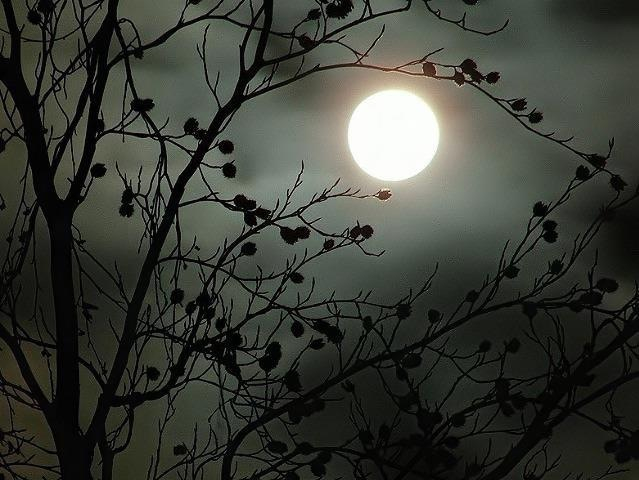
A cold full December moon cresting high over the Clinton schoolyard – staid brick building structures back lit with beams of moonlight, a few lone figures with dogs scuffling, breath in clouds in front of them, a faint dusting of white on the frozen ground.

in summertime the bats swoop down over this little round of track and trampled grass and soccer goalposts. In daytime the children shriek happily or protest the small devastating cruelties of their recess torments.

In the night with the moon bright, these daytime activities echo, ghostly.

In this city interior it is sometimes hard to distinguish the moon from a street lamp – a single globe like so many others – hard to believe the number of cultures that created a Moon Goddess out of this small frail lamp – almost an unremarkable phenomenon in the forest of lights.

A brisk February moon over the farm fields of southern Ontario – Ajax, Port Hope, whisking by in the night, the horn of the train calling out forlorn and hopeful at once, coming, coming, we are coming. As fast as the train goes, the moon does not move, the fields and houses are drowsy in her soft light.

A humid March moon low over the small town of shacks by the jungle – powerful single light of the night, illuminating modest wooden lean-to’s for homes, mud streets, the last tired men heading home after the long day to settle in before the monkeys begin to scream from their trees.

Late in the night when the moon is highest, laying a blue light over this little collection of shacks, only the skinny crazy woman is out – the  woman who went mad with grief, losing her child to one of those childhood illnesses afflicting only the countries closest to the equator.  She wanders in the night, sometimes silent, sometimes still wailing her grief to the unblinking moon, her body still young and beautiful under her rags, her tangled hair a glorious matted mane of dark waves. Tragedy incarnate, the beauty, the insanity, the youth, the grief, the potential, the loss.

The big river is not far.

A singular star-effacing June moon over the playas del este just outside of Havana – a beam of clarity on the ruins of dreams and hopes of generations past – rubble that used to be construction, vacant chicken joints that used to be dreams of prosperity, empty lots that once had been valuable property along the beach.  The most undeveloped, unspoiled and unloved stretch of fine white gleaming sand.

We walked, my new love and I, along the beach, my hand in his, contemplating together the empty shadows of lives unfinished, the dreams of futures never realized, the beginnings left hanging, suspended, abandoned.  The moon held us in its light, showing us the path, a way along the dark beach by its light.

A sharp glaring mystical eye of a moon over the October desert mountain stretch – a penetrating gaze in a landscape that offers nowhere to hide. The mountains present themselves stark dark ochre against the dark blue sky like a childrens’s book of cutouts. Pink highways push northward. Whiffs and shadows of the cultures of the plains, the great warriors, the visionaries, people of power, shimmer around the edges of shrubs, speed limit signs and gas pump exits.

A hazy unreliable November moon watching the square and the streets of Coyoacan, nudging its light into the patio and the windows of the casita azul, empty and haunted. Amidst the teeming millions, the frankly frightening overwhelming labyrinthine megacity, still the nights give themselves to the snaking rising mist of the ghosts of the old souls, the departed, the ancients, the history of the city. Even outside the throbbing discotheques, the shining towers of business and industry, the ancient layers of the Aztec breathe out their pustulent breath until the rays of the sun break the spell yet again, and all manners of ordinary activity return.
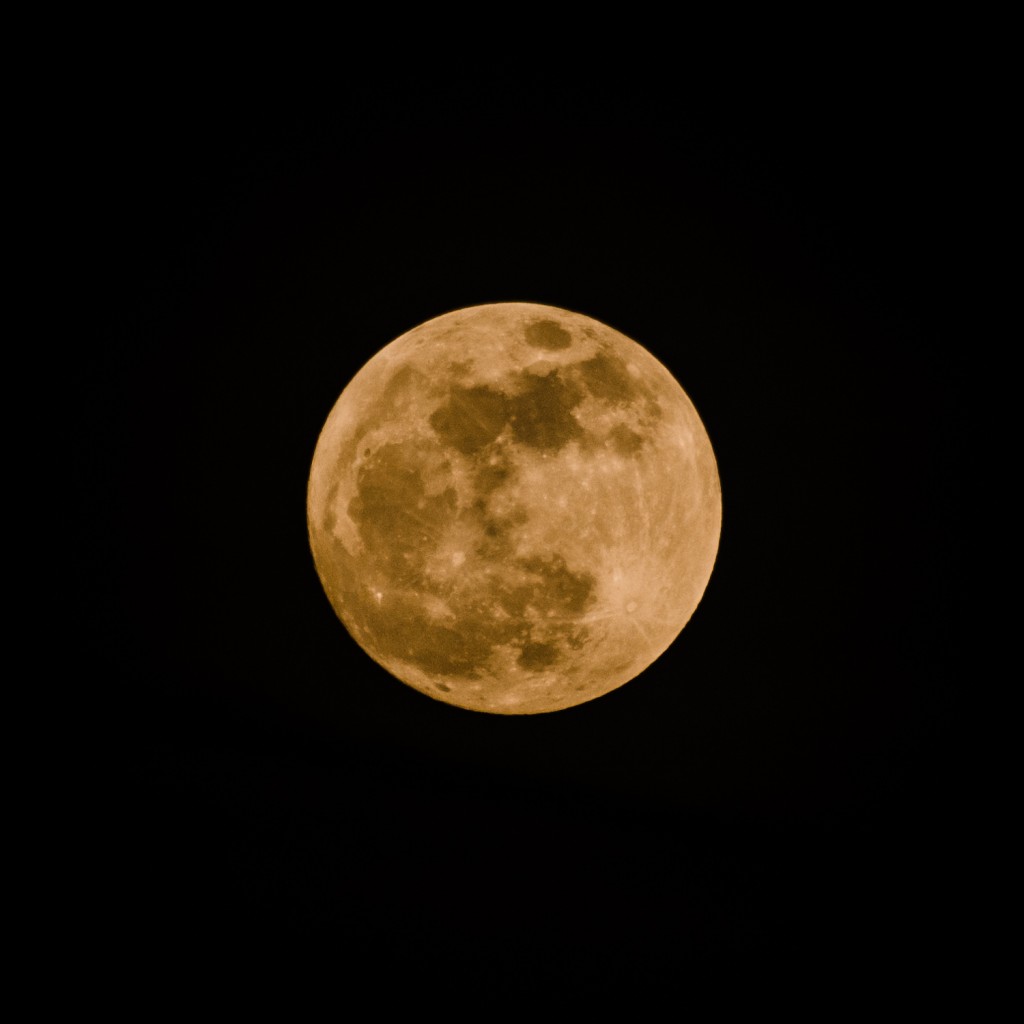
A massive May supermoon rising engorged and heavy, menacing as it looms over the city, heaving itself above the downtown highrises and slowly propelling itself up into the sky. In the park, people are stopped silent and clustered, staring, pointing, cel phones out taking pictures of the big ball in the sky over downtown.

I wander the paths of the park, alone with my phone, frustrated at the paucity of the images it’s able to capture of this monstrous moon.  Still, I pace back and forth, stalling, biding time, watching the moon climbing up the sky, waiting out the hours with my heart in my hand at the edge of the park, the street, the sirens, the moon, as my love – no longer new, now a fumbling, faltering marriage – is packing his bags, getting his belongings together, and leaving.
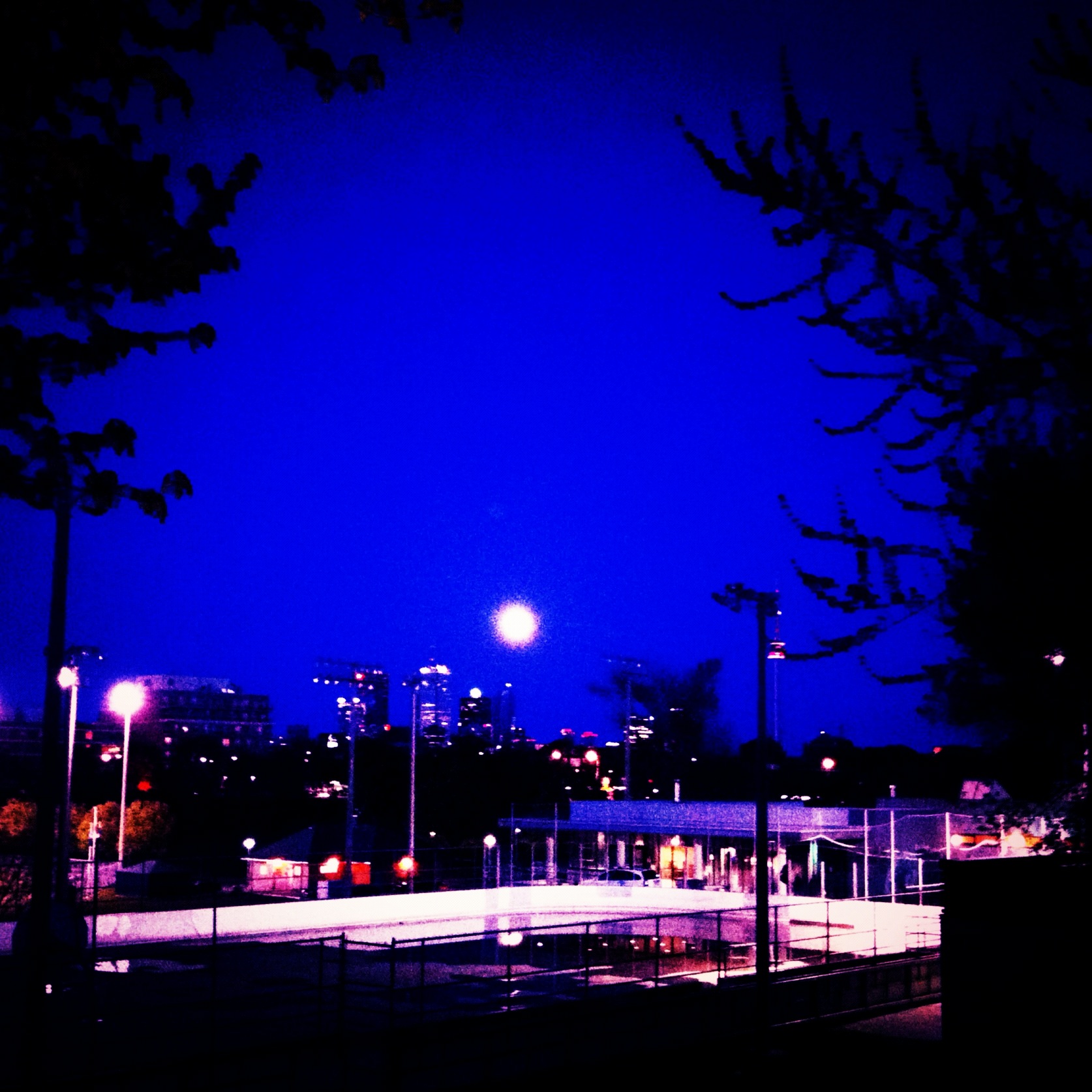
Photo note – usually I use my own photos, but most of these (save the one immediately above) are found from various places on the internet.  However as they were largely not credited where I found them, I have left them without credits here with apologies.
Film, music, party

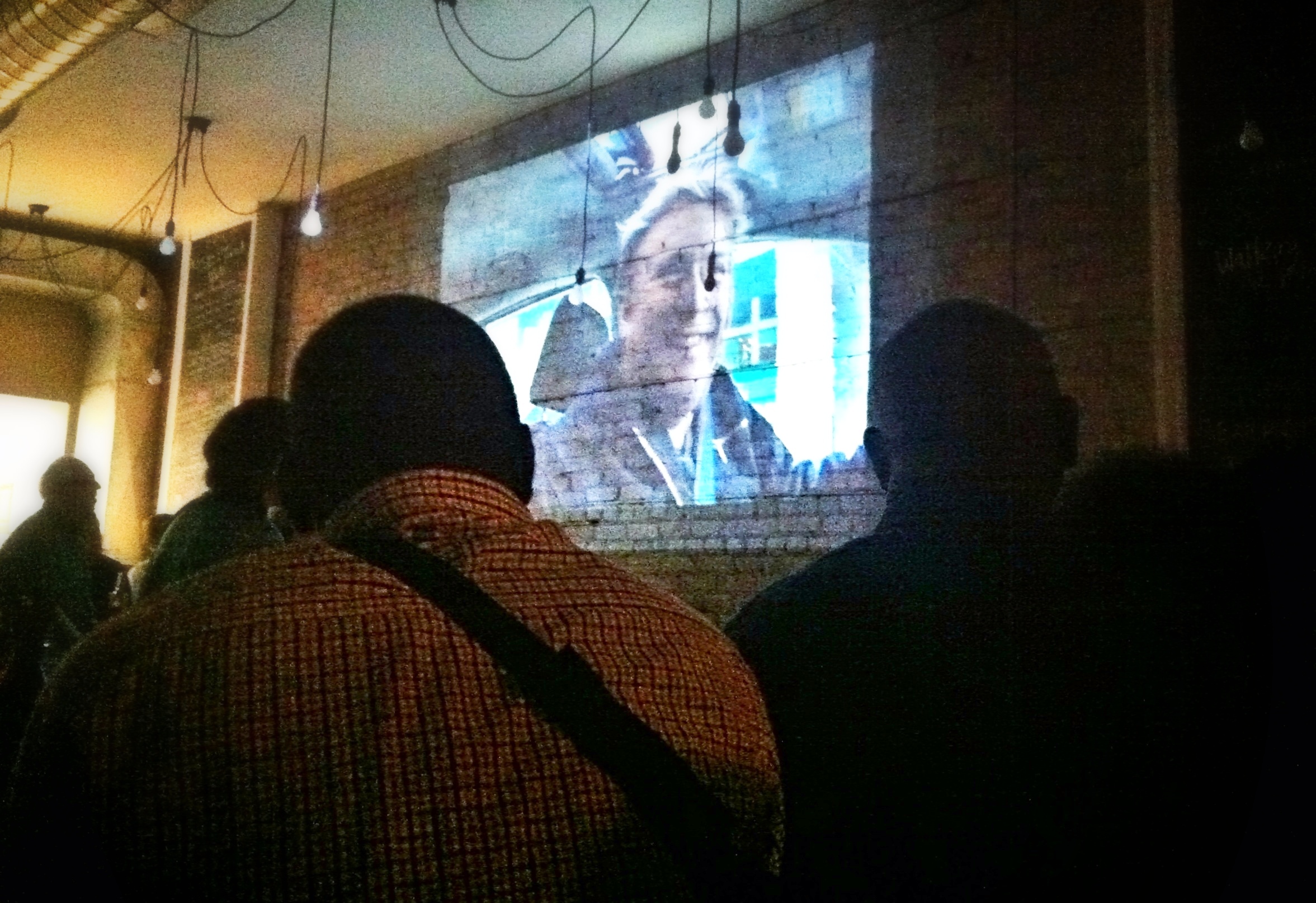
Last night we drove to Stratford to a film screening, part of the Stratford Music Festival. It was a film I’d worked on several years ago about Jane Bunnett and the making of the album Embracing Voices with a Cuban music group, Desandann. Desandann were going to be there at the screening and would be seeing the film for the first time. On the way there Elisa, the director, explained the film would be shown on the bare brick wall of a restaurant – a fairly excruciating scenario for any director, let alone one as brilliant with a camera as Elisa…but there it was.
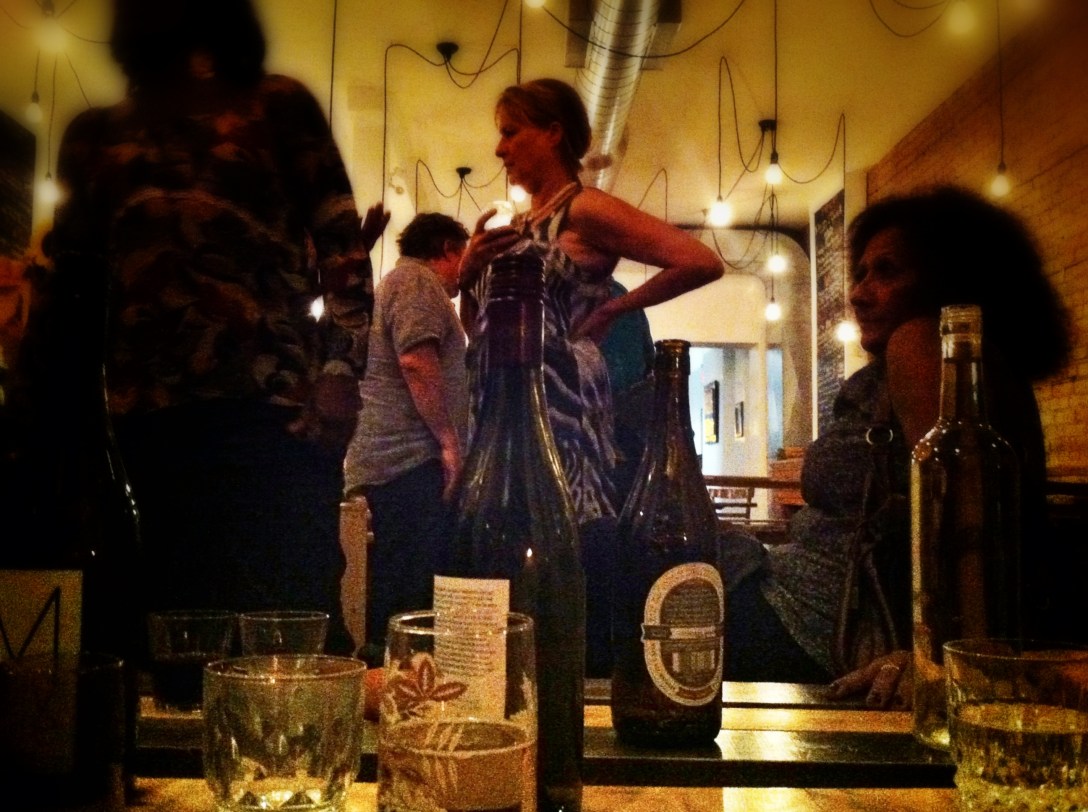
first arrivalWhen we arrived, dinner was just beginning. Things felt a little quiet, a little formal, as if there was something missing – at first I couldn’t pinpoint what. Plates of food came and went – a bit rarified for the Cuban palette, a bit heavy on vegetables and pungent cheeses – but still it seemed there was something else not quite right in the scene… And then it hit me – a table of Cuban musicians and no alcohol! No, no, no – this was not an acceptable state of affairs.
We ordered several bottles for the table, and just then Jane and her life and music partner Larry Cramer burst into the room, a party in a box, and the evening really began.
beerThe film begins with Jane in a moment of despair and doubt about her life in music, a heartbreaking and surprising life passage for a woman of such talent. Just listen to her solo on this track –
Even without subtitles, the folks in Grupo Desandann got the gist of the story, how it was through the love of friends, her love of Cuban music, and her collaboration with them that she remembered herself, slowly got her mojo back, and they went on to make this beautiful album together.
projectionAfter the screening, emotional speeches were given, hugs and shoutouts were passed around, tears were shed, and then sitting there, suddenly, Desandann broke into song.
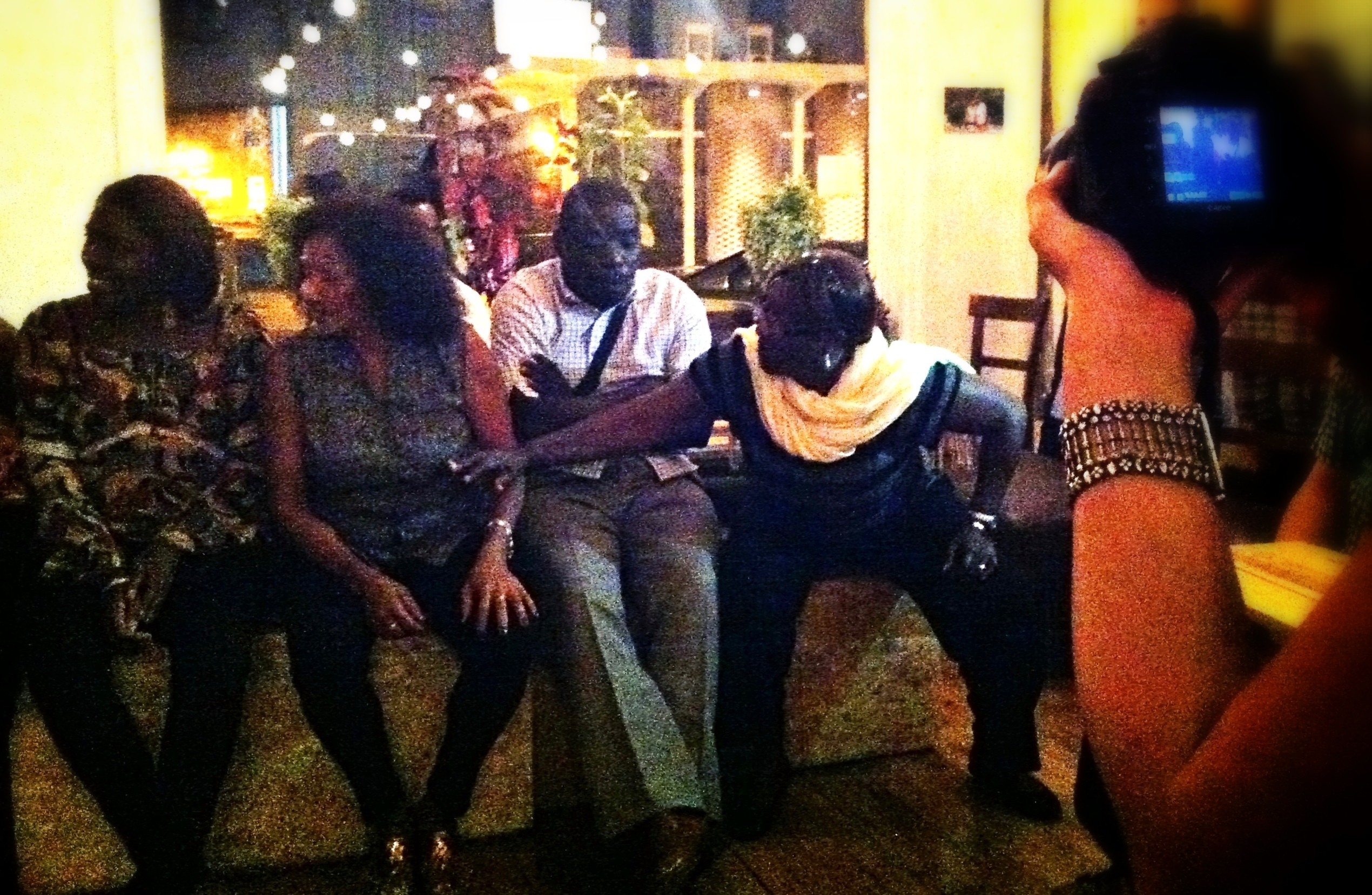
singing startsIt was so stirring, so moving to see them right there, the rich power of their voices emerging effortlessly, the hairs rose on my arms feeling their sound wash over us in waves, building to the crescendo –

singing full onThis week they’re in Toronto, at the CNE twice a day, and Wednesday night at Hugh’s Room with Jane and Larry. If you can, check them out. Just remember to stay away from the cronut burgers.

Power Animals and Santos

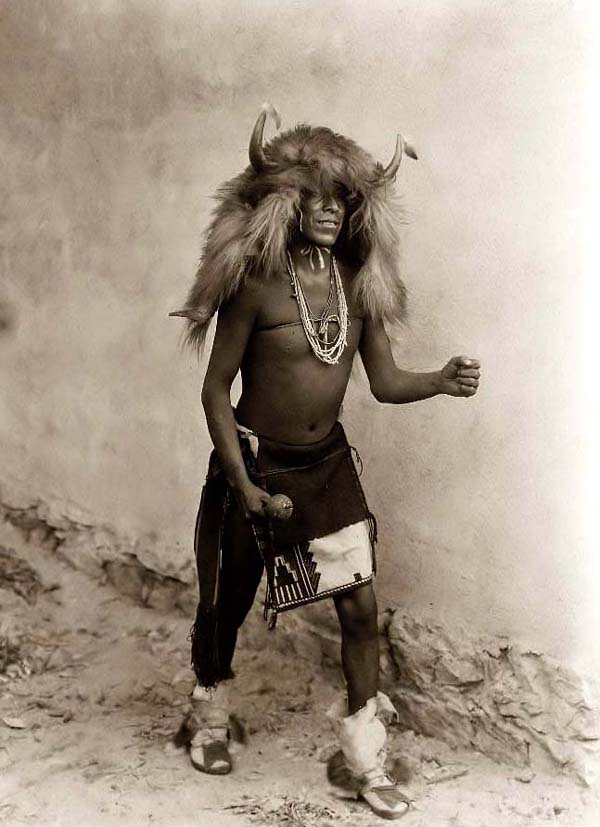
Buffalo-DancerOne of the teachers I follow – travelling when possible to her workshops in the States cause yes, she is that unique and interesting – is Ohki Simine Forest.
An important element of the work she does with people is helping each person discover and build a relationship with their personal power animal. It’s a modernized, workshop-able version of what was pretty traditional Native custom.  Ohki herself is Mohawk of the Wolf Clan (clan animals being entirely separate from power animals) and she currently lives in Chiapas amongst the Maya, so she is influenced by both Haudenosaunee (Iroquois) and Mayan cultures, with a dash of Mongolian shamanic education thrown in.
The idea of a power animal or animal totem is that an animal guides and influences your spirit throughout this life. It’s not really as exotic as it sounds – chances are you already have an inkling of your animal, dream of them often or feel some affinity for a particular species. But this relationship can be developed, enriched. As Ted Andrews, author of Animal Speak writes –

By discovering your animal totem, studying it and then learning to merge with it, you will be able to call its energy forth whenever needed.

Ohki expands on this, suggesting more of a two-way street kind of arrangement –

In all cases, this exchange of energy between soul and power animal must be understood as a trade… In the exchange for mutual evolution, it obtains some of your mind’s energy, which you probably have in excess, while it gives you back the instinctual and intuitive power, powers often relinquished by humans.

Wolf Dancer Lakota NationAccording to Ohki, the power animal resides behind our backs and above our heads, attached to what she calls the “dream body”. So when you see someone wearing an animal skin or dancing with a skin draped over them, it approximates the location of their power animal living just ever so slightly behind, ever so slightly above the physical body. And dancing, descending into trance with the rhythm of the drum, the heartbeat of the earth, is a way to connect deeply with your animal.
Santeria, the religion of Afro-Cuban culture, has a somewhat similar current in its use of drums to connect with spirit, and in that when someone is born, they are not seen simply as individuals, but are considered a child of one of the various Orishas or Saints, incarnations of characters from Yoruba tradition. Some are found as children to be so highly charged with an Orisha, they are encouraged to follow the path, learn the Yoruba language, and as they get older will go into trance and channel their Santo at religious events. The use of drums, complex rhythms and song to enter into a state of deep connection with the spirits, is a huge part of what has created the spectacular range of Cuban music.

In the fall, my husband and I went to Cuba for his first visit back since he moved to Canada.  His mother told us to come over on Thursday night as there would be a party at the house, a Fiesta de Santo – a Saint’s Party, a Santeria event – in honour of Eleggua, the Trickster, dweller of crossroads, opener of gates and pathways.
eleggua-eshu-3-a-study-for-the-orishas-collectionWhen we arrived at the house – an apartment, really – people were crowded on the front balcony, spilling out from the tiny living room, the closet of a kitchen, and we could see through the half-open door to the bedroom the Eleggua, not yet dressed, but already deep into his trance, holding court, waving a half-empty bottle of rum as he channeled the ancient spirit. His voice rose with animation and agitation, speaking half in Spanish, half in Yoruba, calling various people into the room and looking deep into their souls and lives and telling them about themselves, what they must do to ease their burdens in life, to clear their paths.
Eleggua’s character is infantile and tempestuous – he sulks and plays tricks and demands candies and rum and songs, exhausting his hosts.  At one point, swaggering around the drummers and dancers squeezed into the living room, he took a swig on his bottle of rum and sprayed a mouthful all over my husband. No one reacted. My husband simply stood up, walked to the kitchen and wiped himself off. Apparently the thing is, one must endure his behaviour. And he will test and test and test the limits of that endurance.
I asked my husband who the man was in his everyday life and he said he would just be an ordinary man with an ordinary job who a babalao would have singled out at a young age as embodying the Eleggua. And so he would be called on to do these ceremonies, exhausting as they might be, as little as he might even remember of them.
At a certain point a chicken appeared from the shadows of the back porch, and Eleggua began to dance with the chicken poised on his shoulders.  Holding one arm out he balanced the chicken on his shoulder and began to dance the most natural symbiotic fusion of man and chicken, then without missing a beat dropped the chicken into his hands, clutching it in tight, lovingly, to his chest as he danced, and then up went the chicken onto the other extended arm, until he passed the chicken off to someone and began to dance AS a chicken, squatting down amongst the drums and drummers, his head jutting out in sharp pecks, arms as wings flapping, strutting around the room.
Of course the real live chicken didn’t make it to morning, and at some point there was a rather gory spectacle of the chicken’s demise. I was out on the front balcony talking to my sister-in-law when the chicken’s head came flying out, landing small and sad in the dust of the road, and I peeked into the living room just long enough to see the body of the chicken tipped up as Eleggua drank back the flow of blood.
But that image aside, what was most striking in his performance that night was the man’s ability to channel both the physicality of the chicken and the spirit of the Orisha Eleggua, the faculty, the facility for entering fully into a trance state and allowing the self to be coursed through with animal and ancient archetypal energies truly affecting and memorable.